 Policy Makers Need to Toss Away the Language of Austerity and Reset Their Priorities
|
|
|
|
Policy Makers Need to Toss Away the Language of Austerity and Reset Their Priorities
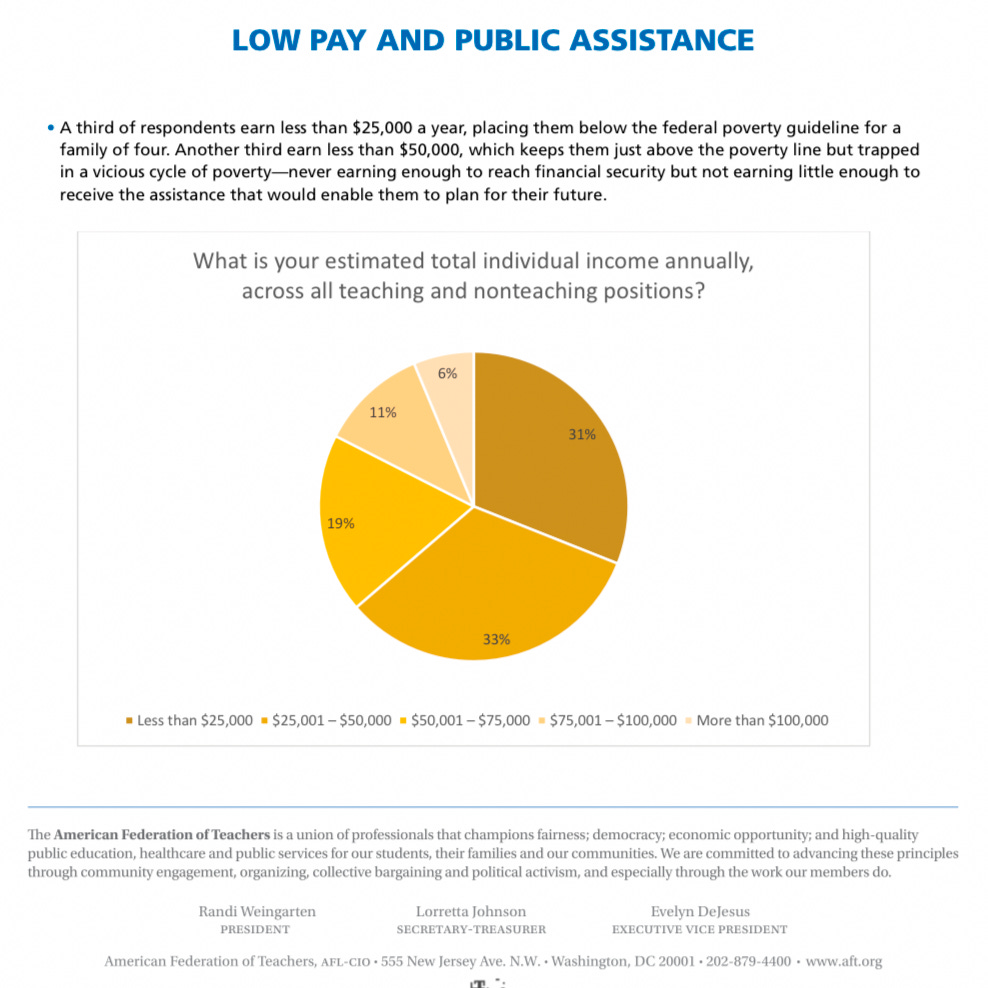
Pie chart is from the American Federation of Teachers report, “An Army of Temps.”
Geoffrey Johnson is an adjunct instructor in California who has been active in the fight over adjunctification of the academy. I was pointed in his direction by other activists who said he could offer me useful context as I reported on the adjunct issue and expanded my own activism through the adjunct faculty union at Rutgers University.
Adjunctification, a word that many in the academic labor movement view as problematic, refers to a Neo-liberal structural reformation of higher education labor, with fewer and fewer tenured and tenure-track faculty being hired. Instead, two- and four-years colleges and universities are relying on contingent or “casual” faculty, or those without tenure protection. About seven in 10 instructors are now contingent — which includes adjuncts like Johnson and like me, as well as graduate students and non-tenure or contract instructors who work full-time but lack long-term protection.
The move, as Joe Berry and Helena Worthen pointed out to me, gives university administration “flexibility” they say is necessary to deal with enrollment shifts. Academia has move to a just-in-time model for instruction, one similar to what we see in manufacturing a sector in which companies cut back on inventory and produce only what is needed at any given point. This saves companies money on inventory, but leaves them vulnerable to supply chain disruptions — such as the ones we have witnessed over the last two years.
Upgrade to paid
Keep reading with a 7-day free trial
Subscribe to Channel Surfing to keep reading this post and get 7 days of free access to the full post archives.
Start trial
A subscription gets you:
 |
Subscriber-only posts and full archive |
|
Post comments and join the community |
© 2022 Hank Kalet
Email me for address.
Unsubscribe
 
|
|


Author: hankkalet
Hank Kalet is a poet and freelance journalist. He is the economic needs reporter for NJ Spotlight, teaches journalism at Rutgers University and writing at Middlesex County College and Brookdale Community College. He writes a semi-monthly column for the Progressive Populist. He is a lifelong fan of the New York Mets and New York Knicks, drinks too much coffee and attends as many Bruce Springsteen concerts as his meager finances will allow. He lives in South Brunswick with his wife Annie.
View all posts by hankkalet





 Hank Kalet