
I’ve been writing a lot lately about On the Road, a book that meant a great deal to the 19-year-old me. But On the Road was not the first book that struck a nerve.
When I was in grade school, I avoided reading anything but sports-themed books and a handful of comic books. It seems odd to say now, but I wasn’t a reader.
That changed in sixth grade in Ann Sisko’s class when I read several books that caught my attention and indoctrinated me into the joys of the written word.
The first was The Outsiders — the first book I read and reread. Another was a book written in the 1950s by Nevil Shute called On the Beach (published the same year as On the Road), which traced the difficult route taken by a military submarine as it dealt with the fallout from a nuclear explosion.
Both of those books were the subject of feature films, have remained in print and are fairy well known. The third book in my triumvirate of formative works, however, fell out of print and was largely forgotten.
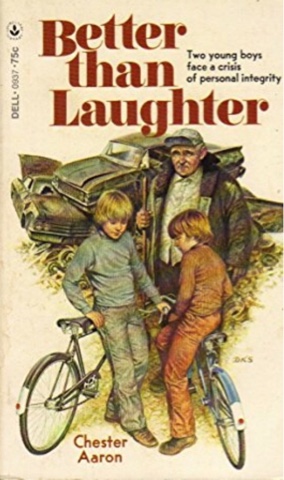
But there was a book I had read about eight years earlier that stuck with me. I didn’t remember the title. All I remembered was a bare plot outline — two kids run away to a junk yard where they meet someone named Horace. That’s it. But I did remember its effect on me.
I was tooling around the web and started playing with search terms and different combinations that included the words “runaways,” “brothers,” “junkyard,” and “Horace.” I added “YA,” for young adult, which is the new fiction craze. And there it was. The book was called Better than Laughter. It was by Chester Aaron, a largely forgotten but prolific writer of both YA and adult fiction.
Here is a review of the book on Kirkus Reviews:
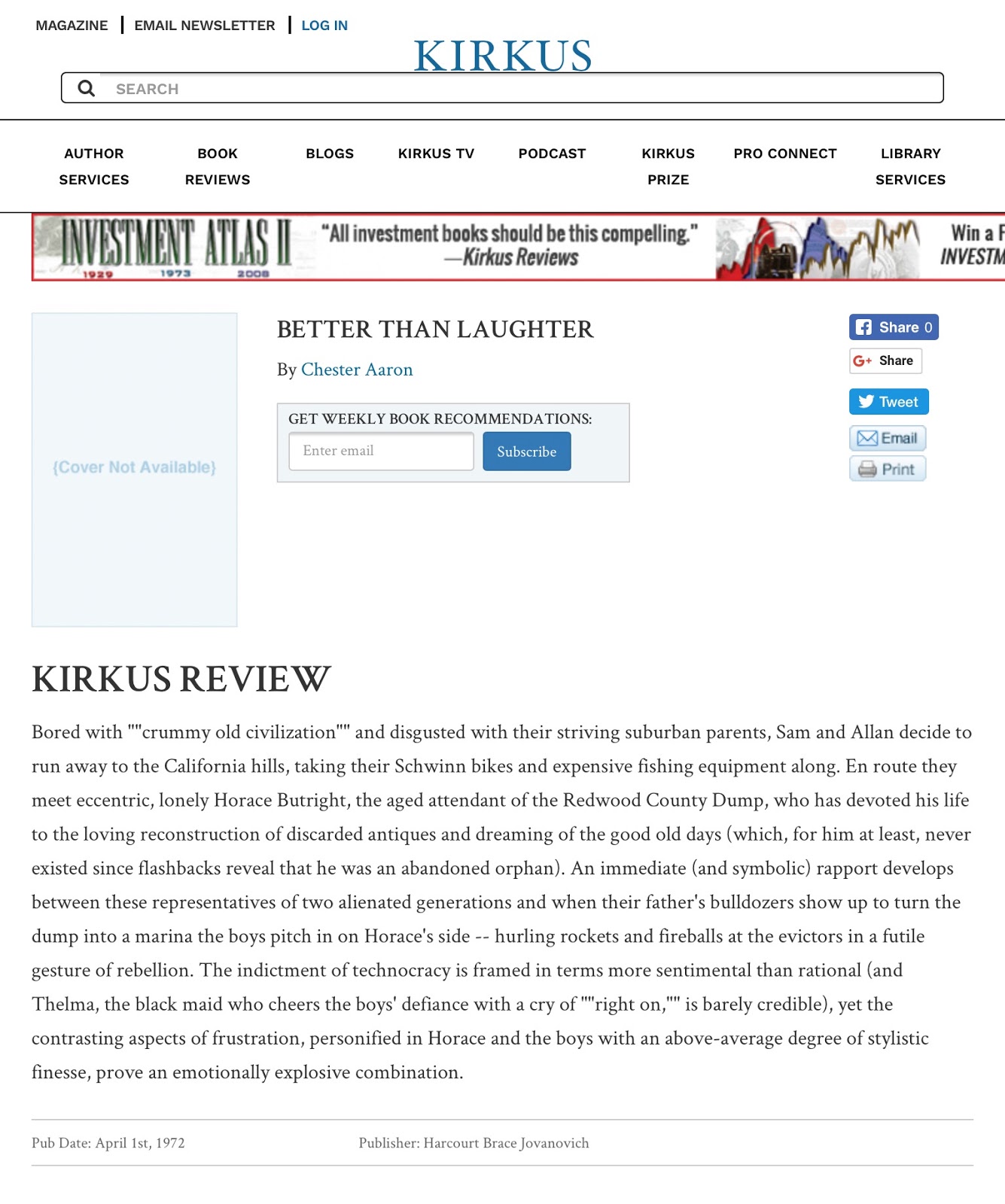
Reading the review — and I’ll be ordering a used copy of the book today — I now understand how it fits into my personal syllabus: The need for authenticity, the distaste for phoniness, the alienation and disconnection from modern capitalistic civilization. It would appear to fit nicely alongside Salinger, Twain and Hinton, and even Kerouac.

 Hank Kalet