
I thought I was a beat, but I was just a boy
Notes on Re-Reading Kerouac in my 50s Part 9
(Read Part 8 here, Part 7 here, Part 6 here, Part 5 here, Part 4 here, Part 3 here, Part 2 here and Part 1 here.)
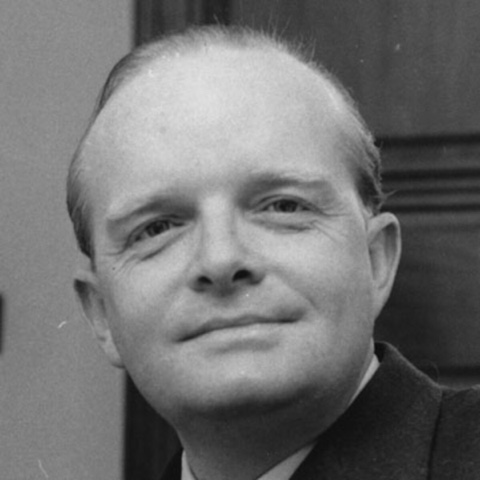
When I started posting these entries as a public journal to my blog, Truman Capote’s name came up thanks to his famous quip about Jack Kerouac. The comment takes various forms and may not have been directed at Kerouac but at the loose group of writers identified as Beat. Essentially, the various versions can be summed this way: “That’s not writing, it’s typing.”
It’s certainly a pithy remark, though I’m not sure it’s entirely fair. A writer’s style is personal, an extension of his personality. Ernest Hemingway’s terse, almost matter-of-fact syntax has been described as muscular and masculine. I’m not sure how a prose style can take on alleged gender qualities, but it does match his persona and the reticence of his characters. John Cheever writes with what can be called an urbane delivery, fitting his stories of upper class New York.
And Capote, in Breakfast at Tiffany’s and other novels, writes with a precision that reminds me most of Edith Wharton — each detail signaling something small to the reader, something perhaps imperceptible until the details accumulate. This approach serves his stories well, but slows them down, dampens the pace.
Kerouac’s style was all his own, as well, a kind of breathless lack of specificity that matched the manicness of his adventures — as if he had to rush to get it all down. This manic element reminds me most of Walt Whitman, whose long lines build from lists of nouns and accretions of prepositional phrases, something new at the time, lending a sense of bigness and inclusiveness to his poetry. Whitman read aloud becomes a race against breath, a sometimes futile effort to get each line and all of its information out in a single breath.
Kerouac’s manic episodes function the same way, though not syntactically. He builds this momentum through the use of open-ended adjectives and repetition — it’s all mad and gone and holy, and if he stops to be more precise, well, he just might miss it. His approach to writing is similar to his attitude about jazz in that he views the act of getting everything down as being as important or even more important than the final product. And he views this act through a religious lens, as though the experiences and their recounting function as revelation. Mad. Holy. Angelic.
His depressive episodes have the same feel; they are descents into self-doubt that shift his focus — and some of his language — away from the ecstatic toward a similarly indefinite descriptive architecture that also has a religious feel.
“And for the moment,” he writes as a trip to San Francisco crashes on the rocks,
I had treacherous the point of ecstasy that I always wanted to reach, which was the complete step across chronological time into timeless shadows, and wonderment in the bleakness of the mortal realm, and the sensation of death kicking at my heels to move on, with a phantom digging it’s own heels, and myself hurrying to a void of uncreated emptiness, the potent and inconceivable radiancies shining in bright Mind Essence, innumerable lotus lands falling open in the magic mothswarm of heaven. (173)
One sentence rushing forward, no, falling into an abyss. This sounds heavier than it is, but it does give a glimpse into a mind struggling in the darkness. He tingles with bliss, as he considers the stability of what he calls “the intrinsic Mind” that created the space in which “birth and death took place.” Sal says he’d “died and had been reborn numberless times,” couldn’t remember the transitions between. They’re “so ghostly easy, a magical action for naught” — because it doesn’t matter. It’s out of our hands.
I though I ways going to die the very next moment. But I didn’t die, and walked four miles and picked up ten long butts and took them back to Marylou’s hotel room and poured their tobacco in my old pipe and lit up. I was too young to know what had happened.
And he gets lost in the food smells of the city, receding deeper into himself. It is not quite stream of consciousness, but it is crafted to have that feel. And that’s why I think Capote was not being fair. Style, in this case, matches the substance, the improvisational feel matches the argument Sal is making, matches his sense that he lives in the moment, matches the energy of the protagonists.
I’m not arguing that Sal/Kerouac’s pseudo-religiosity/philosophizing is complex or particularly well thought out. It’s a mashup of elements of his Catholicism and the Buddhism he had been dabbling in; but he’s not really getting below the surface.
That doesn’t matter. It’s the energy that matters — especially to the 20-year-olds who have long been this book’s primary audience.

 Hank Kalet