What follows is my initial reflections as I set out to re-read Jack Kerouac’s On the Road for the first time in at least a decade. i won’t say much now, but I’ll be posting updated entries as I go with the intention, down the road, of pulling together an essay.
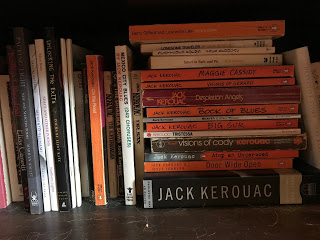 |
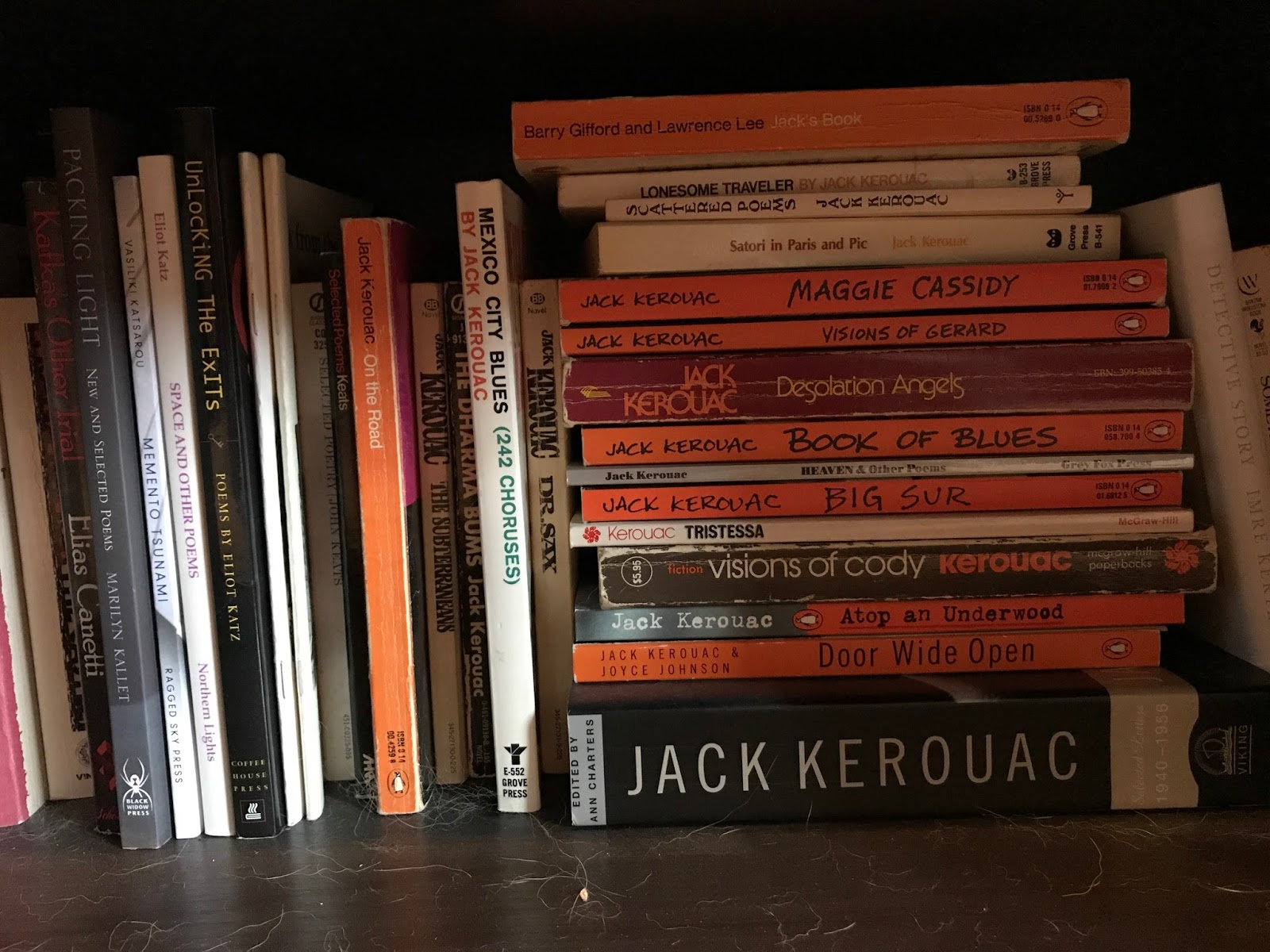
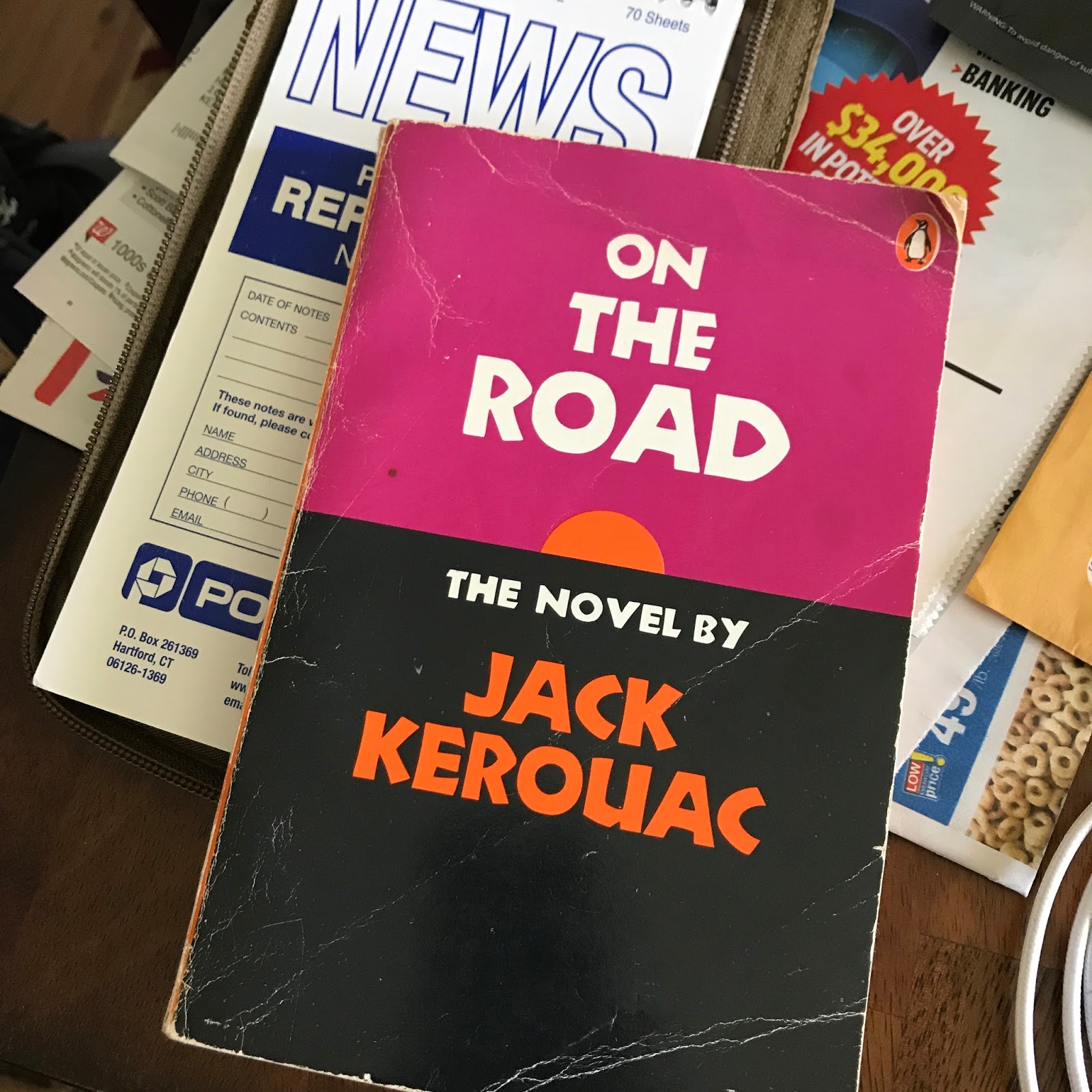
| My Keroauc collection. |
I thought I was a beat, but I was just a boy
Notes on Re-Reading Kerouac in my 50s
It was probably 1981, the spring, the end of the second trimester or beginning of the third of my first year at Penn State I dropped out after two years, partly because I thought I would be the next Kerouac). I must’ve read an article in Rolling Stone, or that’s what my imagination, mining the frayed edges of memory from a distant time and place, of another me, is telling me. I can’t be sure. It could’ve been Creem. Or The Aquarian. Or Crawdaddy. I was addicted to music journalism, to music — punk and new wave, the blues, jazz. Freed from the constraints of a self imposed high school conformity, I took it all in.
Perhaps it was Jim Carroll’s Basketball Diaries that turned me on to Jack Kerouac, or his Living at the Movies, which contains a poem for the beat legend written upon his death, “Highway Report”:
Kerouac is dead at 47
on radio
and McCartney alive
(we lost). and
tragedy’s just that and what to do but keep on going all in one line (Carroll 67)
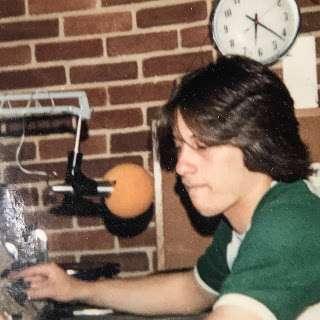 |
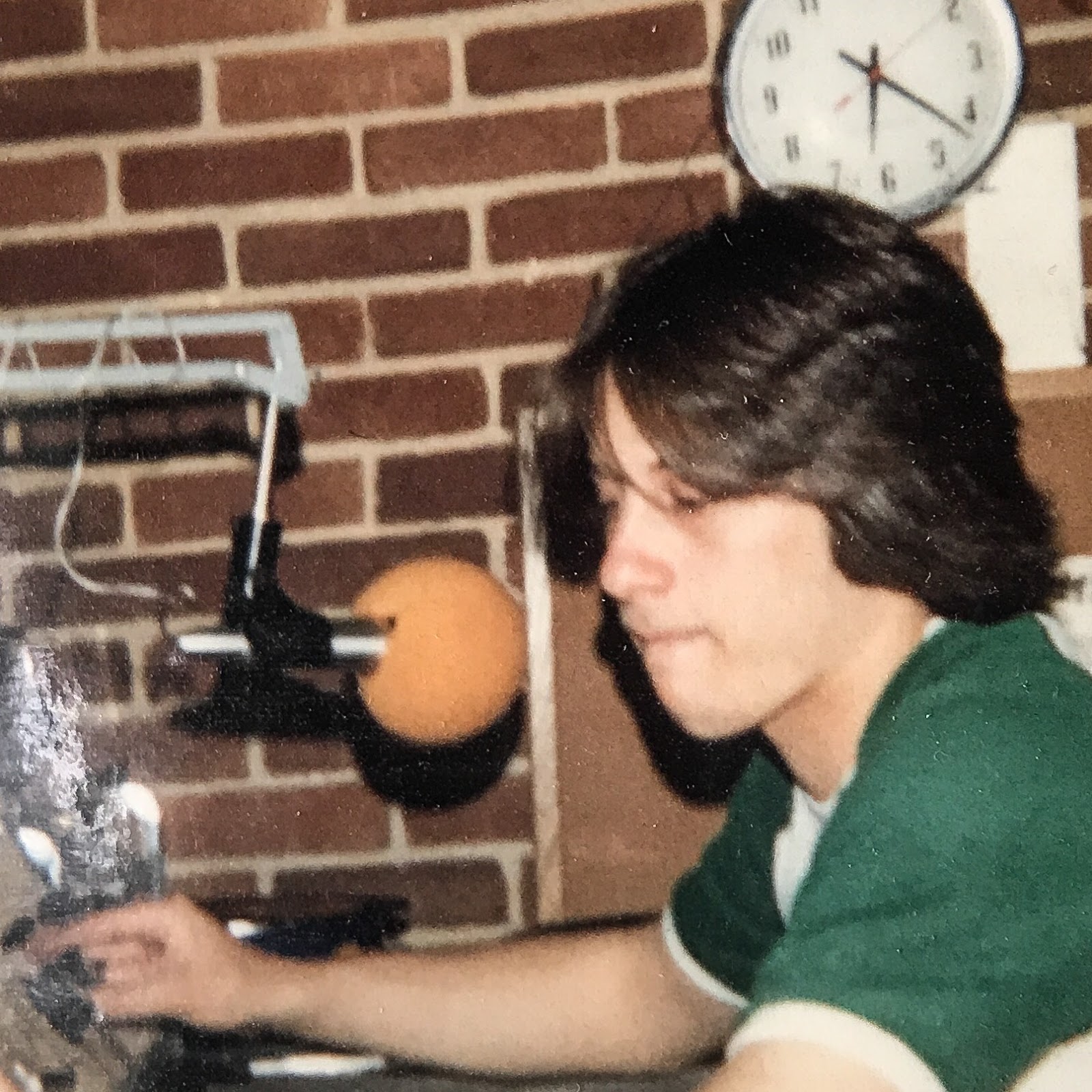
| Me, circa 1981, when I was spinning records at WEHR. |
I want o say that the impetus behind my reading Kerouac for the first time doesn’t matter, that I came to On the Road with the freshest of eyes, but I’ve come to realize that just isn’t possible. On the Road is an iconic text, and it has been for much of the 60 years since it’s initial publication. As much as any other book, it is credited with helping to create the 1960s counterculture — one that reveled in nonconformity, that kicked the staid ’50s to the curb in pursuit of sex, drugs and rock and roll, spiritual growth, political and personal freedom, much of which proved unsustainable.
Kerouac abhorred this connection — by the time the counterculture was in full flower, his underlying conservativism came to dominate and he spent the final years of his life railing in reaction against what he saw as a communist-inspired and morally bankrupt ethos.
I didn’t know about the reactionary Kerouac when I first picked up On the Road. At not-quite-nineteen, I had become obsessed with the ’60s. I grew my hair long, smoked dope and took acid. I skipped class. I read voraciously — music bios and periodicals, poetry, . At one point, I took to wearing a blue wool knit cap — a winter cap — like Bruce Springsteen, who’d become my idol, or Nicholson in One Flew Over the Cuckoo’s Nest. I caromed back and forth between styles and movements — punk to hippie, beat to working-class chic. I played guitar (badly) and started fiddling with songs and poems. I took creative writing and lit classes, passed some, failed most. I was adrift, seeking an intellectual anchor. Enter Kerouac.
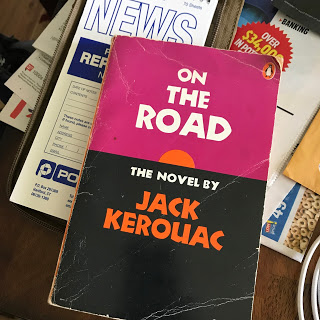 |
| My copy of the book. |
As I said, I don’t remember how I came upon On the Road, but I am sure the dual
myths surrounding book and author led me to the cheap paper pack that ended up in my possession. That copy — dog-eared after multiple readings, pages falling out, underlined with notes jotted in the margins — is long gone. I think I gave it to a writer friend when I returned to college after three years away. The trade copy of the book — $4.95 from Penguin published in the early ’80s. — has held up better, mostly because I’ve moved on. I do not return to it the way I did when I was 20 or 22. In fact, it’s probably been more than a decade since I’ve read it, and for good reason. It is a young man’s book, and I emphasize both “young” and “man.” It is, at its core, a romantic Bildungsroman, the story of a restless seeker who never really finds what he’s searching for, because he never figures out what that might be. It is romantic in that even it’s most downwardly cast or even depressing sections are presented as part of a heroic quest. Sal Paradise, Kerouac’s alter ego in On the Road, shares with Christian from Bunyan’s Pilgrim’s Progress a desire to escape, Sal from a life of boredom and the cultural sin of conformity, Christian from his hometown of Destruction and an underlying sense of permanent sinfulness. But, whereas Christian’s quest is a moral one, Sal’s remains unformed and selfish. He is seeking enlightenment, but in the form of kicks. His foils — Dean Moriarty, Carlo Marx and others, all based on famous and not-so-famous Beat writers, intellectuals and hangers-on — often present different approaches and alternate narratives that Sal dabbles with, but to which he cannot commit.
And this aspect of the story, this failed commitment, the narrator’s youthful wandering — and the romanticization of this restlessness — is what makes it a young man’s read.
***
I’ll have more as I reread, but I am curious what other readers think of the book today, especially if their first reads were 20, 30, 40 years ago. Post your thoughts in the comments.
Author: hankkalet
Hank Kalet is a poet and freelance journalist. He is the economic needs reporter for NJ Spotlight, teaches journalism at Rutgers University and writing at Middlesex County College and Brookdale Community College. He writes a semi-monthly column for the Progressive Populist. He is a lifelong fan of the New York Mets and New York Knicks, drinks too much coffee and attends as many Bruce Springsteen concerts as his meager finances will allow. He lives in South Brunswick with his wife Annie.
View all posts by hankkalet


 Hank Kalet