
 |
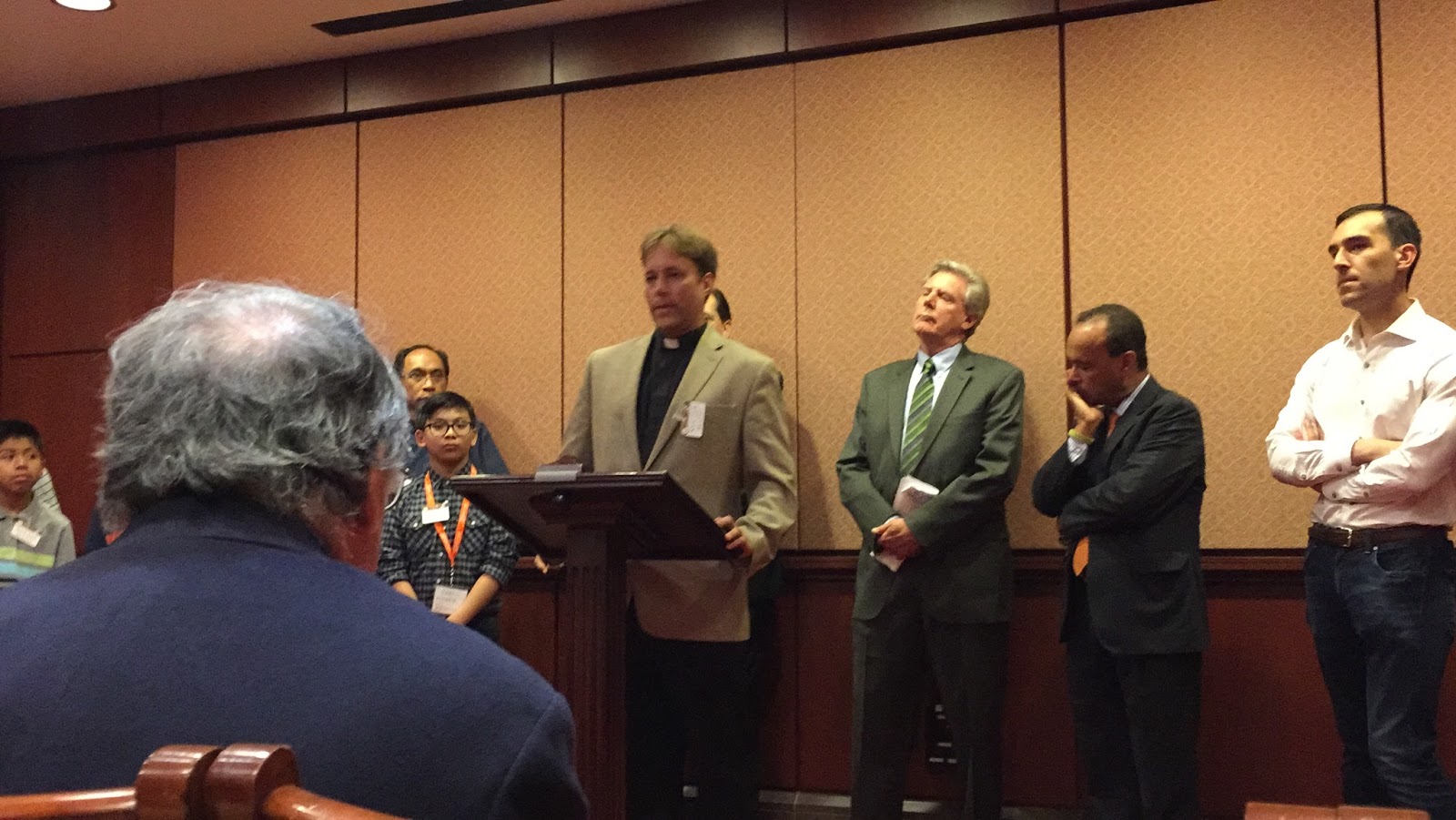
| The Rev. Seth Kaper-Dale at a press conference in Washington DC. (courtesy of his gubernatorial campaign) |
Five months into the Trump administration and it is clear that the limited reprieve given to undocumented immigrants is over. It is not just the public stance of the administration, which has continued to press for a ban on travel to and from a half dozen Muslim-majority nations and announcements from the Department of Homeland Security and the U.S. Attorney General that the gloves were coming off. The evidence can be found in towns across the county, as immigration officials armed with a new set of priorities have been detaining immigrants who in recent years might have been allowed to live undisturbed and below the radar.
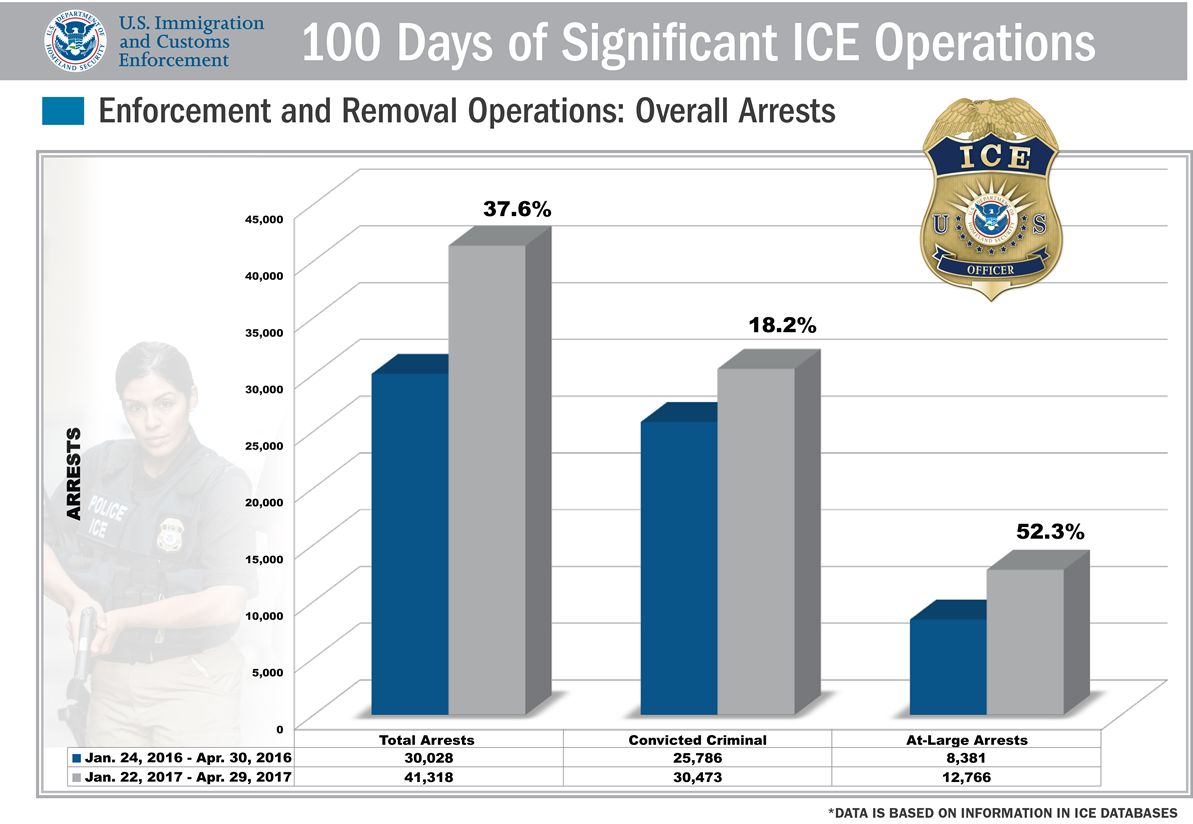
Immigration and Customs Enforcement has reported that immigration arrests were up 37.6 percent during the first 100 days of the Trump presidency, compared with the same time period in 2016.
Between Jan. 22 and April 29, 2017, ICE Enforcement and Removal Operations (ERO) deportation officers administratively arrested 41,318 individuals on civil immigration charges. Between Jan. 24 and April 30, 2016, ERO arrested 30,028.
“These statistics reflect President Trump’s commitment to enforce our immigration laws fairly and across the board. ICE agents and officers have been given clear direction to focus on threats to public safety and national security, which has resulted in a substantial increase in the arrest of convicted criminal aliens. However, when we encounter others who are in the country unlawfully, we will execute our sworn duty and enforce the law. As the data demonstrates, ICE continues to execute our mission professionally and in accordance with the law, and our communities will be much safer for it,” said ICE Acting Director Thomas Homan.
This change is about more than numbers, however. It is about human lives. I spoke recently with the Rev. Seth Kaper-Dale of the Highland Park Reformed Church, who has been working on behalf of undocumented immigrants who fled Indonesia to escape the brutality of the Sukharto regime in the late 1990s. Hundreds of asylum seekers took up residence in New Jersey, most not cognizant of a change in federal law that required them to file their asylum application within a year of entry. Most failed to do so, and most were then denied asylum on appeal. Many have been deported, including six in recent months.
Kaper-Dale, who is running for governor as an independent, said that many Indonesian immigrants had final orders of deportation, though they had been protected by a stay of removal issued by ICE. They were required to report to ICE on a regular basis — similar to what a parolee does. Kaper-Dale says they abided by the rules, but the changes in Washington have made it harder to do so. The stay was overridden by the Jan. 25 executive order on immigration, and those with final orders were now added to the priorities list. The New Jersey Indonesians who were deported recently were picked up by ICE because they followed the rules set by ICE and reported, he said.
Now, I’m in a spot where people don’t know if should report or not if report.
Kaper-Dale told me that
U.S. citizen kids lost their dad. A newlywed was separated from his wife, another guy supporting his disabled wife was deported. That’s what is going on. There are 43 others in the same boat living locally in Central Jersey, and we’re terrified for them and we don’t understand how an administration that touts family values can destroy life like this.
<!– /* Font Definitions */ @font-face {font-family:Cambria; panose-1:2 4 5 3 5 4 6 3 2 4; mso-font-charset:0; mso-generic-font-family:auto; mso-font-pitch:variable; mso-font-signature:3 0 0 0 1 0;} /* Style Definitions */ p.MsoNormal, li.MsoNormal, div.MsoNormal {mso-style-parent:""; margin-top:0in; margin-right:0in; margin-bottom:10.0pt; margin-left:0in; mso-pagination:widow-orphan; font-size:12.0pt; font-family:"Times New Roman"; mso-ascii-font-family:Cambria; mso-ascii-theme-font:minor-latin; mso-fareast-font-family:Cambria; mso-fareast-theme-font:minor-latin; mso-hansi-font-family:Cambria; mso-hansi-theme-font:minor-latin; mso-bidi-font-family:"Times New Roman"; mso-bidi-theme-font:minor-bidi;} @page Section1 {size:8.5in 11.0in; margin:1.0in 1.25in 1.0in 1.25in; mso-header-margin:.5in; mso-footer-margin:.5in; mso-paper-source:0;} div.Section1 {page:Section1;} –> Rosa Santana, of First Friends of NJ and NY, an immigration advocacy group, told me the increased enforcement is evident on the streets. There are multiple reports of ICE and border agents rounding up immigrants and raiding workplaces. She said immigration agents are “everywhere,” because ICE knows that “local police are refusing to help,.” The result, she said, is an increase in detention and deportation, which sends a chill through the community.
Supporters of the new crackdown say that the undocumented have broken the law, making no distinction between civil and criminal law. Some offer sympathies, but nearly all view these more aggressive priorities as necessary to a) protect national security, b) save American jobs, or c) preserve American culture. (This last, of course, is just code for preserving the United States as a mostly white nation, but that is an argument for another day.)
Illegal immigration does create problems, including in the national security and jobs areas. The current immigration system leaves immigrants vulnerable to unscrupulous employers who use workers’ immigration statuses to intimidate workers into silence. This allows employers to pay less than minimum wage, not pay overtime, short paychecks or illegally withhold pay, force workers to endure unhealthy or dangerous work conditions and so on, because workers are afraid of being deported if they speak up.
So, yes, reform is needed. But a crackdown — and some of the other punitive efforts, such as the proposed border wall, the Muslim ban, etc. — is both unwise and counterproductive, more likely to send immigrants further into the shadows while empowering employers even more.
This is not just conjecture. This is what workers and advocates are saying. It is an act of self-preservation — but it also makes it easier for the Trump administration to ramp up its efforts. Angy Rivera, in a piece in The Progressive in 2014, described the fear that gripped her family, a fear that pushed her to come out publicly as undocumented.
Doing so, however, was dangerous. Rivera said that her mother
blankly stared at me, and then she accused me of wanting to put myself and our family at risk. I was going against all the warnings she had given me.
Ultimately, she said, “Coming out was like breaking invisible chains that tied me down.”
We have a responsibility, if we believe that the crackdown is immoral, to shed light on its effects, to help give voice to those who fear repercussions should they speak out.
Send me an e-mail.

 Hank Kalet