
I wrote this poem several years during one of my MFA modules at Fairleigh Dickinson. We were having a discussion about prompts and topics, and my mentor Kathleen Graber mentioned something about using comic books or superheroes as a possible jumping-off point for the creative process. I honestly don’t remember the specifics, but this poem was the result:
HOW MATT BECAME DAREDEVIL
(Listen to the poem)He knew he was more
than the shirt-tail-tucked kid
who’d stay after class
and pound erasers.
Picked last for sports,
left to watch as the kids
banged line drives deep
beyond the infield in summer.
Pressed into lockers,
beat bloody in the back of the gym.
Maybe the radioactive liquid
that blinded Matt Murdock
in the comics would spill
from a passing truck,
heighten his senses,
and he’d then scale the walls
of his apartment house,
and chase the villains
across the city’s rooftops.
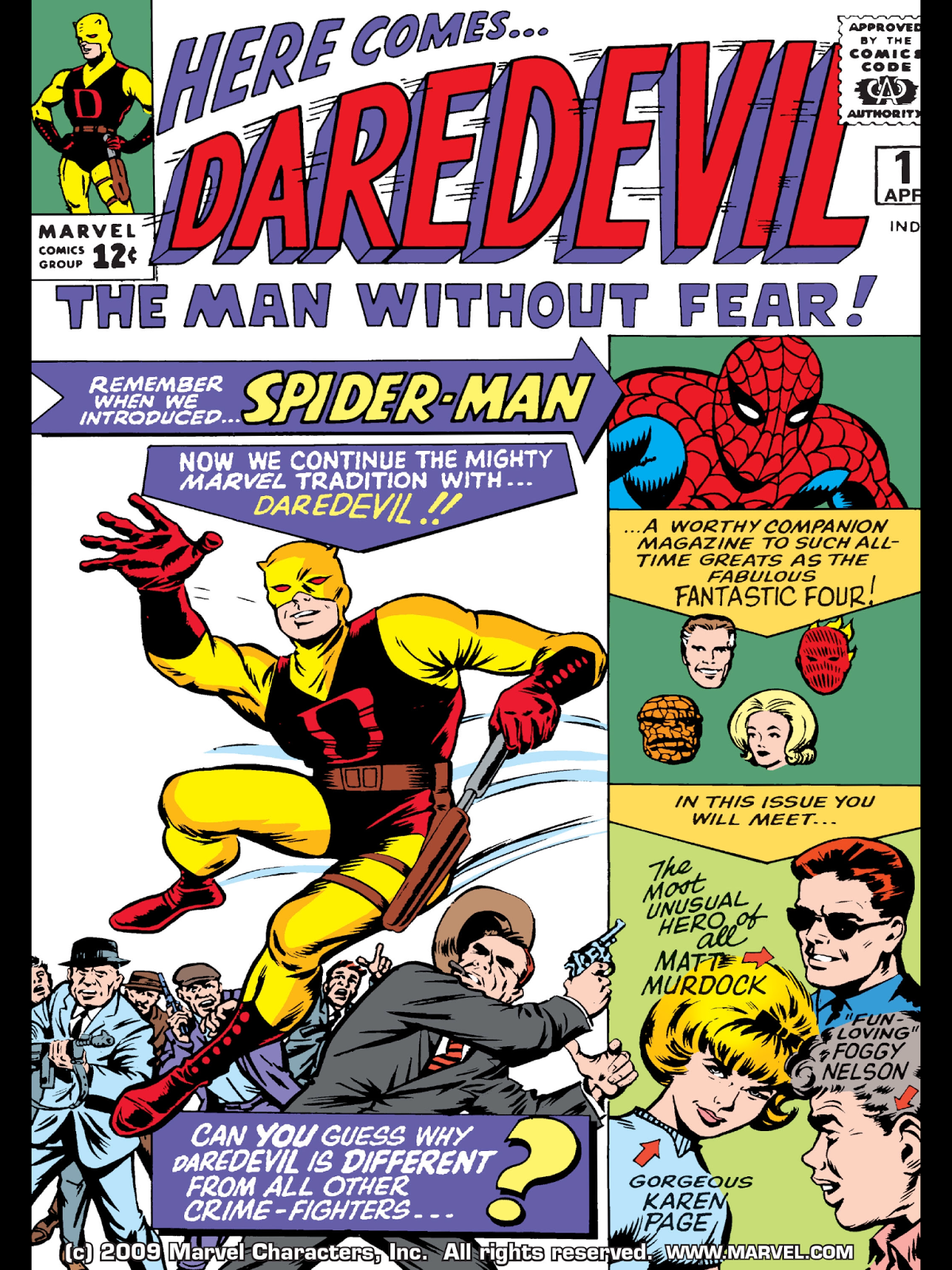
The poem obviously plays off Daredevil’s origin story. Young teen Matt Murdock, living in Hell’s Kitchen, saves an old woman who is crossing the street from an oncoming truck and, in the process, injures himself and gets doused with a liquid (depending on the version, it is radioactive, or toxic in some other way). He is blinded, but also empowered. His remaining four senses take over — which is not unusual — but the extent to which his hearing and touch, in particular, are heightened are superhuman. Murdock, a brilliant student, is the son of a boxer, a real Joe Palooka-type who gets beat down often and is in bed with the mob. Some versions present the elder Murdock being violent at home, but most show a strong bond between dad and son, a father who is protective and sacrifices a measure of integrity — by throwing fights — to put food on their table. Jack Murdock is eventually killed when he refuses to throw a last fight and Matt is left on his own.
Murdock eventually develops unparalleled acrobatic and martial arts skills, which he combines with his superhuman senses (his touch and hearing give him a radar-like ability to sense what is coming) to become a crime fighter, defending the downtrodden of his low-income Hell’s Kitchen neighborhood.
The nut of the origin story, of course, is the transformation from good-hearted and altruistic, but incredibly vulnerable kid (poor, blind, eventually orphaned) to defender of the downtrodden, both in costume and as a lawyer representing tenants, the cheated and the accused.
My poem, of course, plays off this transformation in the form of a wish, of desire, and I like to think that its power (if it has any) derives from the off-page understanding that it is a dream that will be left unfulfilled.
I presented the poem to my class earlier this week. It’s a freshmen composition class that uses graphic novels to explore the questions of ethics and morality and that I use as the basis of my writing assignments. I’m not in the habit of using my work in class, but I thought this poem — and a poem tied to Spider-Man fit the thematic concerns of the class. (I will be teaching another 10 or 12 poems, including those by Sherman Alexie and Lucille Clifton.)
I projected the poem on a screen and read it aloud, which opened it up not just for my students, but for me — I saw things in the poem that had not been apparent, and they found and talked about things I’d not realized were there when I wrote it.
The big one was that the first half, the description of the bullied student, a description based partly on me (I had some experience with being the brunt of bullying, for instance, and I was never a great athlete in organized sports, though I was usually one of the captains when we’d pick sides in the park) and partly on the experience of friends. The students picked up on the bullying theme — no surprise at a time when bullying has been elevated as an issue that administrators and teachers have to take seriously.
But as I read it, I had the realization that the first half describes Peter Parker — Spider-Man’s alter ego — who was bullied until being bit by the radioactive spider. In fact, there is an element of many of Marvel superheroes’ origin myths in this poem — Murdock and Parker, but also the scientist Bruce Banner (Hulk) and soldier-wannabe Steve Rogers (Captain America). The students picked up on this and led the discussion — day one of class, mind you — and made the point that this also serves as the origin story for man super villains (and rich bad guys in other media).
The question, then, which my poem does not explore, but that is at the heart of the Daredevil, Spider-Man and Captain America origins, is how the influence of something good imposed from the outside — a parent, a friend, an aunt and uncle, a sense of patriotism and humanity — can prevent the buried rage from taking control. Daredevil and Spider-Man engage in some questionable actions — Daredevil seeks revenge — but ultimately settles on a path of good. They easily could have tipped in the other direction.
As for how this might affect my own writing: It’s a reminder that writing begins as a private act, but ultimately ends as a public one. The reader is a participant in creating meaning, and while we don’t compromise to please the reader we have to recognize the roll the reader will play when our poems, stories, reported articles make their way into the real world.

 Hank Kalet