
When Charlotte erupted in violence earlier this week, many white Americans retreated to pre-established narratives.
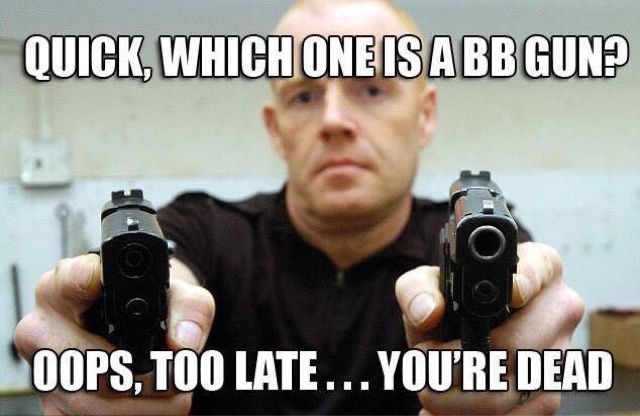
There were memes posted to Facebook reminding us how difficult it is for a police officer to gauge potential danger (as if anyone would dispute this).
There were calls, primarily from police supporters, that we wait to judge until the investigation is concluded — often from the same people so willing to jump to conclusions in terrorism cases, or to judge criminal suspects in the court of public opinion.
We heard about the criminal history of the victim in Charlotte, which was then used to justify the shooting — before the investigation played out, unmasking the bias behind calls from the same people to wait until the facts were known.
And we’ve heard pleas to treat incident separately, as if each had nothing to do with the other.
These seemingly distinct arguments are tied together by a couple of threads. They tend to be made by white suburbanites like myself, people who have the privilege of not fearing for our lives when we see a police cruiser in the rear-view mirror. For us, this is not an existential issue — which helps explain why much of the debate over the NFL-national anthem protests has broken down along racial lines.
I will not speak for African Americans. I can’t, nor should I. But based on what I’ve heard from people I’ve interviewed and from things I’ve read, each black death at the hands of police has a cumulative effect and underscores the failures of a nation built on the enslavement of Africans and the disenfranchisement of freed slaves and other people of color.
The list of black deaths is long, resembling a high school honor roll, but without the honor, and is happening at a time when support systems for the poor — which has a disproportionate impact on communities of color — have been gutted, when voting rights are being scaled back, when more black men are in prison than in college, and so on. The criminal justice system has been rigged against people of color — the lawmakers, laws, administrators, police, jails, reintegration programs, etc, have been designed to or have been managed in a way that creates a disproportionate impact on communities of color (read Michele Alexander’s The New Jim Crow).
So when Keith Lamont Scott is killed by police in Charlotte, under disputed circumstances, the community in Charlotte erupts. The eruption — a riot? a rebellion? an uprising? — is about Scott, but also about the failure of the American political and economic system to “raise all boats,” to use a term favored by the free-marketeers.
Charlotte Mayor Jennifer Roberts, a Democrat, seems to understand this, according to The Washington Post.
Roberts said she believes the anger on her city’s streets — the bloody clashes, looting and street bonfires — is being driven by this nationwide outrage over repeated shootings of black men by police. But the anger has local roots as well, she acknowledged.
As mayor of a city that remains starkly segregated by wealth and race, Roberts said she has tried to narrow those gaps and bridge the resentment and distrust built up over years of disparate policing and economic inequalities.
“We still have discrimination in our society. We still have disparity. We’re working really hard to ameliorate that,” Roberts said. “We have many different groups working on closing the economic gap in Charlotte, people working on the gap in schools and education.”
Discrimination, disparity, botched or tainted investigations, a presidential candidate calling for the return of a stop-and-frisk strategy, a national, decades-long policy of militarize policing (read Radley Balko’s work in The Washington Post or his book Rise of the Warrior Cop) and turning urban areas into occupied zones — but African Americans need to wait, to let the facts come out, to wait for the process to determine guilt. Except, the process nearly always exonerates — few cops are charged (Tulsa stands out because of this), fewer are indicted, fewer still go to trial and a negligible amount get convicted.
So what exactly are we asking African Americans to wait for? I’m going to end with two quotations from Martin Luther King Jr. — I taught “Letter from Birmingham Jail” yesterday. The first, I think, places the Charlotte disturbances in context, the second explains why waiting is not an option, why justice and equality must happen now. “Riot,” he said in 1966, “is the language of the unheard.” It is, as it is in Charlotte, as it was in Baltimore and Ferguson, an unfortunate response, but not unexpected, the inevitable result of a lit fuse.
As for waiting, King believed that a fool’s game. He said “it is an historical fact that “privileged groups seldom give up their privileges voluntarily,” and that calls for calm or patience often are no more than delaying tactics.
For years now I have heard the word “Wait!” It rings in the ear of every Negro with piercing familiarity. This “Wait” has almost always meant “Never.” We must come to see, with one of our distinguished jurists, that “justice too long delayed is justice denied.”
Patience, in the end, is not a virtue, at least not for those who feel as if they live in society’s crosshairs. Patience, for those caught in the sites, can mean death.

 Hank Kalet