<!– /* Font Definitions */ @font-face {font-family:"Arial Unicode MS"; panose-1:2 11 6 4 2 2 2 2 2 4; mso-font-charset:0; mso-generic-font-family:auto; mso-font-pitch:variable; mso-font-signature:3 0 0 0 1 0;} /* Style Definitions */ p.MsoNormal, li.MsoNormal, div.MsoNormal {mso-style-parent:""; margin:0in; margin-bottom:.0001pt; mso-pagination:widow-orphan; font-size:12.0pt; font-family:"Times New Roman"; mso-fareast-font-family:"Times New Roman"; mso-bidi-font-family:"Times New Roman";} p.Body1, li.Body1, div.Body1 {mso-style-name:"Body 1"; mso-style-parent:""; margin:0in; margin-bottom:.0001pt; mso-pagination:widow-orphan; font-size:12.0pt; mso-bidi-font-size:10.0pt; font-family:"Times New Roman"; mso-ascii-font-family:Helvetica; mso-fareast-font-family:"Arial Unicode MS"; mso-hansi-font-family:Helvetica; mso-bidi-font-family:"Times New Roman"; color:black;} @page Section1 {size:8.5in 11.0in; margin:1.0in 1.0in 1.0in 1.0in; mso-header-margin:.5in; mso-footer-margin:.6in; mso-paper-source:0;} div.Section1 {page:Section1;}
Let’s start with some basic facts: There are about 650,000 homeless men, women and children in the United States, as of the last official count, a figure that some say is only a fraction of the actual number.
There are about 11,000 in New Jersey alone, a number that has declined a bit since the beginning of the recession, but not by much.
And we, as a society, have done very little to address the problem.
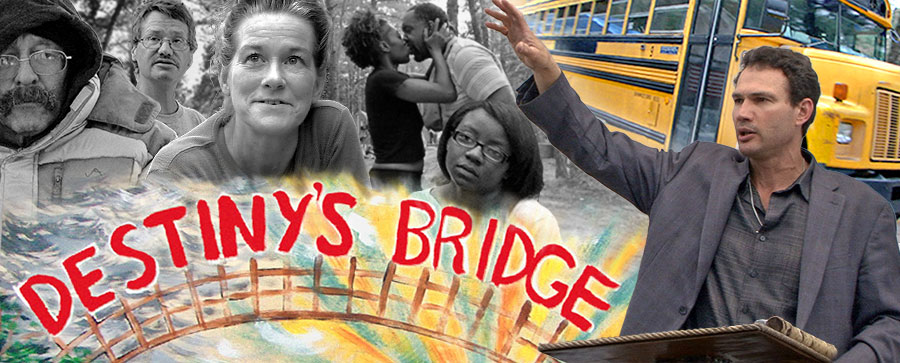
Enter Jack Ballo and his film, Destiny’s Bridge, which had its premiere at the Two River Theater Company in Red Bank on Wednesday. Ballo’s film tells the story of the Tent City homeless camp by following the fates of about a dozen of its residents — Minister Steve Brigham, the camp’s founder and de facto leader, Charlie, Angelo and the couples Jack and Deborah, Sheridann and Nahrida, Wil and Mo, Elwood and Cynthia and Michael and Marilyn — as they struggle to get by. It also follows the very beginnings of “Destiny’s Bridge,” an effort by Brigham and some others to create a new kind of shelter for the homeless.
 Here I need to offer full disclosure: I have been working with Jack and the photographer Sherry Rubel on what we call The Tent City Project since last year. The film is Jack’s piece of the puzzle. Sherry has shot dozens of amazing still images and I have finished the manuscript for a book-length poem (for which I am seeking a publisher and an excerpt of which appears on the back of the film-premiere program) that centers on Tent City.
The story of the camp has grown familiar over the last year to New Jersey residents (partly due to my own journalistic efforts, I am proud to say): Brigham essentially founded the camp about seven years ago as a way of helping a man who came to him for help. The camp has grown to nearly 100 residents since then, creating tensions with the township of Lakewood, where it is located, and resulting in lawsuits. A consent decree signed by the homeless and the township is designed to close the camp, but only after housing is found for its residents. A second lawsuit against Ocean County, which still lacks any formal homeless shelter, continues.
But most of the journalism, whether in print or on video, has been of the hit-and-run variety — a story here, a story there, generally when something spectacular and horrible has happened at the camp.
Ballo’s film does something very different. It commits to telling the stories of the camp’s residents in a holistic manner, to offering the good (a surprise birthday party) and the bad (the arrest of Minister Steve) within the larger context of the camp’s day-to-day existence.
Ballo’s approach is different than most documentary filmmakers and very effective. Unlike Michael Moore, he stays out of things. He doesn’t appear on camera, doesn’t offer voice over or commentary. His goal, as he said during a question-and-answer session following the premiere, is to tell the truth and let the audience decide.
That approach cedes a lot of authority to Minister Steve, who is rightly critical of local officials who have taken a highly combative position — at least until recently. Steve also is critical of a shelter system that warehouses the homeless (thankfully, this is changing) and he views elements of the tent encampment as a possible model. In this, the film posits a solution that is housing based — construct small houses on small lots that can be affordable to low-income people.
My own analysis is more systemic — while I agree that there is a need for more available low-cost housing, I also think there is a need for broader change in how capitalism functions. American corporate capitalism is designed to maximize profit by minimizing costs. This design creates what can best be described as waste product that corporations then push onto to the larger society and expect us to deal with. I use the metaphor of a chemical reaction, which always needs to be in balance. This often leaves a remainder product, an excess compound or element that is discarded.
For American capitalism, that discarded excess is not just air and water pollution, but also the sub-population of people we view as unnecessary to the functioning of our economy. That is why full employment does not mean full employment (4 percent unemployment is considered acceptable) and why we have been more likely to aggressively prosecute the homeless for quality-of-life crimes than to find them housing, address their mental and physical health needs or to make sure that they have enough money to function and do more than just barely survive.
But I digress. Ballo’s film is necessarily simpler and more focused (and in that way different and better than the film I might have made). It does not attempt to take on all of capitalism, but a particularly inhumane aspect of it by reminding us that the people who live in homeless camps like Tent City in Lakewood — which is just one of hundreds around the country — are really not a whole lot different than our neighbors or ourselves.
None of the characters in the film — characters is probably not the right word here; these are real people and treated as real people throughout — want to be living in the woods. They want something better, but that something better has been pushed out of reach for a time. They are struggling with the fallout of their own bad decisions and the decisions made by the big banks, the government and business, which cost us millions of jobs. They are struggling against a bureaucracy that has been designed to deny them help with one hand even as that help has been offered with the other.
In the end, it is clear to the viewer that something is very wrong, that our willingness to allow nearly 100 people to live in a camp in the woods is a failing that needs to be addressed. To Ballo’s credit, he leaves it to the viewer to formulate how to move forward.
Send me an e-mail.
Author: hankkalet
Hank Kalet is a poet and freelance journalist. He is the economic needs reporter for NJ Spotlight, teaches journalism at Rutgers University and writing at Middlesex County College and Brookdale Community College. He writes a semi-monthly column for the Progressive Populist. He is a lifelong fan of the New York Mets and New York Knicks, drinks too much coffee and attends as many Bruce Springsteen concerts as his meager finances will allow. He lives in South Brunswick with his wife Annie.
View all posts by hankkalet

 Here I need to offer full disclosure: I have been working with Jack and the photographer Sherry Rubel on what we call The Tent City Project since last year. The film is Jack’s piece of the puzzle. Sherry has shot dozens of amazing still images and I have finished the manuscript for a book-length poem (for which I am seeking a publisher and an excerpt of which appears on the back of the film-premiere program) that centers on Tent City.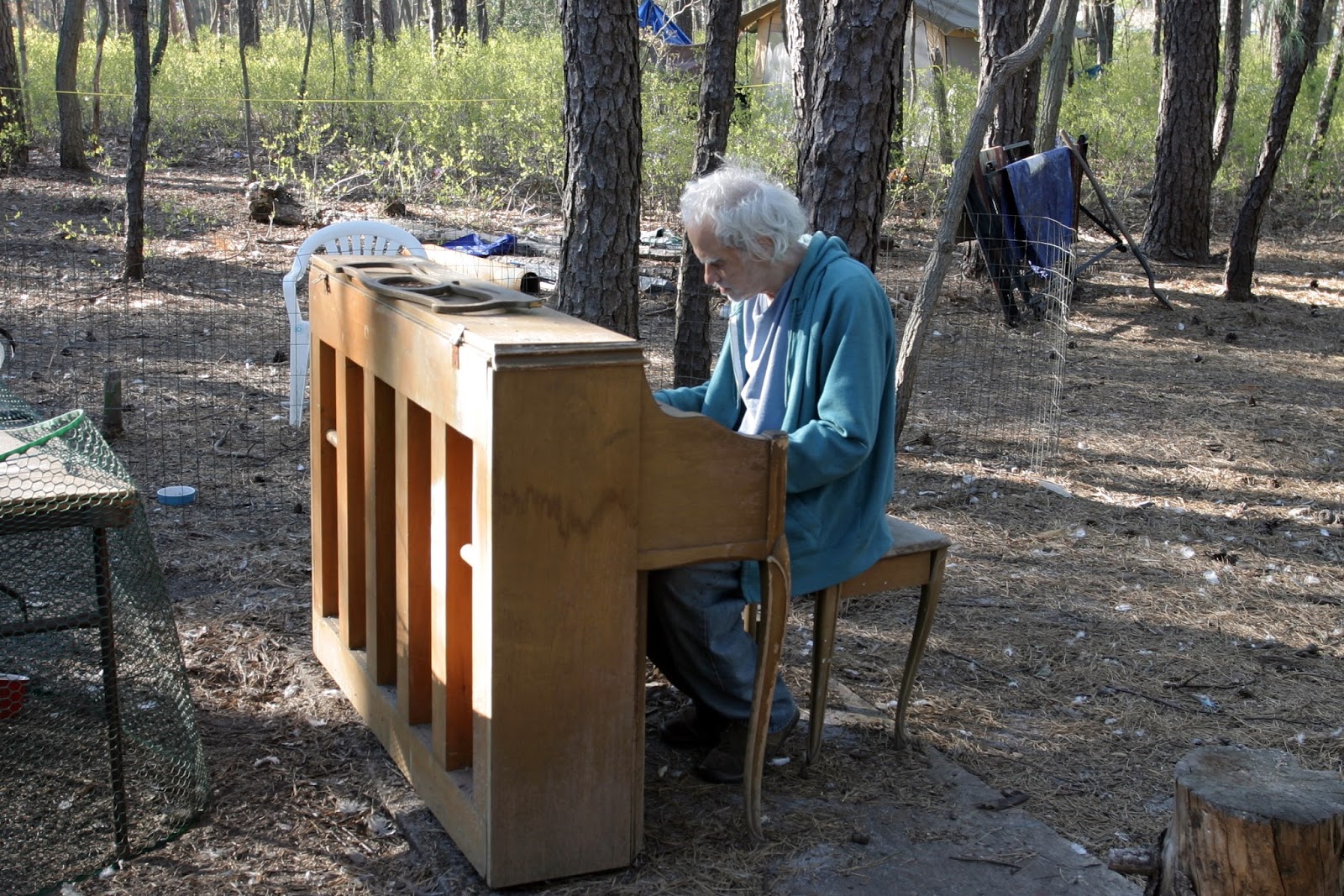

 Hank Kalet
Destiny's Bridge documentary film world premiere was a smashing success!Be sure to \”LIKE\” the film's Facebook page at http://FB.com/DestinysBridge to get updates on subsequent screening locations, DVD's, etc. You can also follow http://twitter.com/DestinysBridge or simply bookmark the film's Web-site at http://DestinysBridge.comTo learn more about Tent City itself, please visit http://TentCityNJ.org or http://FB.com/TentCityNJ