
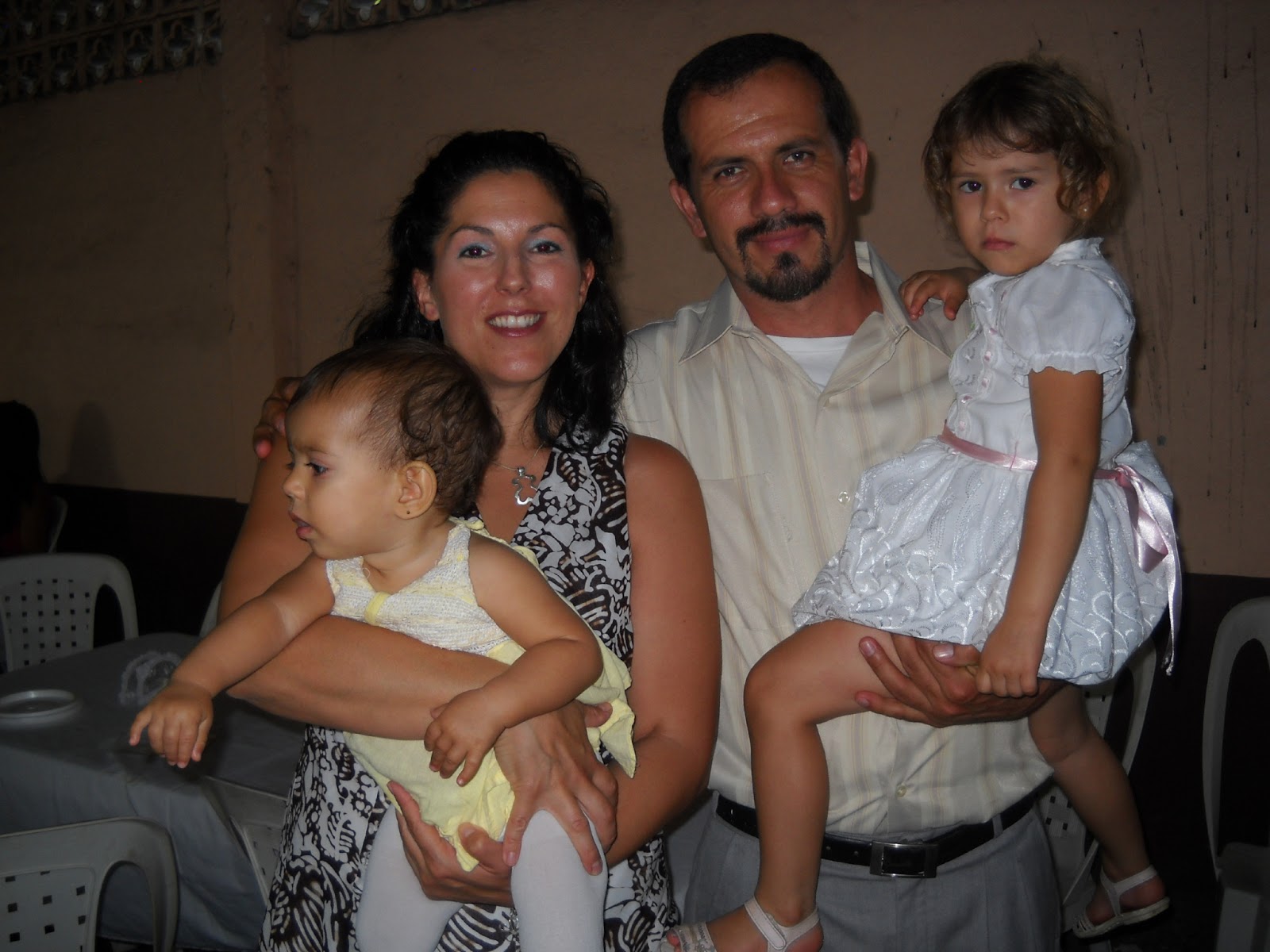
Margot Traverso had to make what she calls an impossible decision.
It was nearly eight years ago and her husband, Osmark Bruemmer Gonzales, remained undocumented. The couple had gotten married in 2005 and decided to try and legalize Gonzales’ immigration status, assuming that their marriage would allow for an orderly process.
They were wrong, and their effort to “do the right thing,” as Traverso said, has landed the couple and their two young children in Vera Cruz, Mexico, where they are waiting out a 10-year bar on Gonzales’ re-entry into the United States.
The reason is the so-called 10-year bar, under which immigrants who are “unlawfully present” in the United States for more than a year must return to their country of origin, where they can apply for a waiver. However, if the immigrant in question has entered more than once – as Gonzales did – he or she is barred for life, though there is a slim possibility that he or she could qualify for a pardon or a waiver.
“When this happened in 2005, my choices were to stay in New Jersey without him for 10 years, or I can leave my whole life for Mexico,” she said. “These are not very good options for a U.S. citizen. The family values were very important to me.”
“To me, the best choice was to keep the core family in tact,” she said later. “I had to leave my aging father, my sister, my career – it was almost like there is no good choices.”
Gonzales first came to the states in 1992 when he was about 18 years old, Traverso said. He stayed about six years and then returned to southern Mexico to visit his ailing mother in 1998. He headed north again a year later, eventually settling in Monmouth County where he met Traverso.
“He hadn’t seen his mother in six years,” Traverso said. “His mother was having health problems and he took that risk and now we are paying the consequences of it.”
The 10-year bar was created as part of the 1996 immigration reforms, passed by the Republican-controlled House and Senate and signed into law by President Bill Clinton, a Democrat. Those reforms were meant to be a crackdown on illegal immigration, with the hope being that it would lead to a reduction in the number of unauthorized immigrants in the United States.
As we know now, the byzantine rules the ’96 reforms put in place have been a miserable failure. There now are more than 11 million undocumented immigrants in the country who have to live in the shadows. While there seems to be some energy pushing the nation toward larger immigration reforms, public debate remains mired in a pointless discussion over border security and conservative demands that there be no amnesty.
The hope is that comprehensive reform will offer a path to legal residency and citizenship for the bulk of the undocumented immigrants and that we will come to the realization that allowing capital to move freely across borders but not people is inhumane.
Comprehensive reforms remain a pipe dream, despite proposals from the president and a bipartisan group of eight senators, so we have been watching President Obama institute small-bore, incremental reforms like the deferred action program for children and a family unification program that will do nothing for Traverso and Gonzales and the thousands of so-called mixed-status families like them. Many live separate lives, while others – like Traverso and Gonzales – find themselves living far from where they consider their home to be.
The family unification rules, which took effect yesterday,are designed to streamline the process for mixed-status families to obtain their visas and green cards. Undocumented immigrants can now apply for a re-entry waiver before they leave the country (they must return to their home country to obtain their visa), which is supposed to reduce the amount of time they must spend outside the United States, while also making the visa trip less risky.
Traverso said the new rules are an improvement over the existing regimen, but they will do little for most of those caught in the mixed-status web because they only apply to immigrants with a single entry into the states and they are not retroactive.
That means remaining in limbo unless comprehensive reform passes or the president widens the program.
“I am a United States citizen,” she said. “We feel United States citizens should have a priority. We just want to present our case before an immigration judge and let him weigh all of the factors.”
For more information on families with mixed-status, check out American Familes United.
Send me an e-mail.

 Hank Kalet