For South Brunswick native Adam Fitzgerald, Sunday’s poetry reading at the South Brunswick Library will be a homecoming.
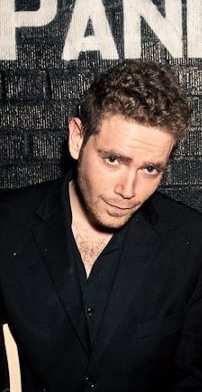
 |
| Adam Fitzgerald |
Fitzgerald, who lives in New York, was born in Staten Island, but grew up in New Jersey, graduating from South Brunswick High School in 2001. He tries to do readings as often as he can “as a way to ambush the poems with the consciousness foremost of other people hearing them.”
Performing them live – and hearing them, himself, helps him try “to get a hold on their oral shape, but also the shape of their specific enunciation—which varies, shifts and evolves (even when the words never change).”
“Then again: small, improvised, inexplicable changes usually happen between what’s on the paper and what I read aloud,” he said. “If some of them feel to me revelatory, I try to incorporate them into the poem, permanently.”
 |
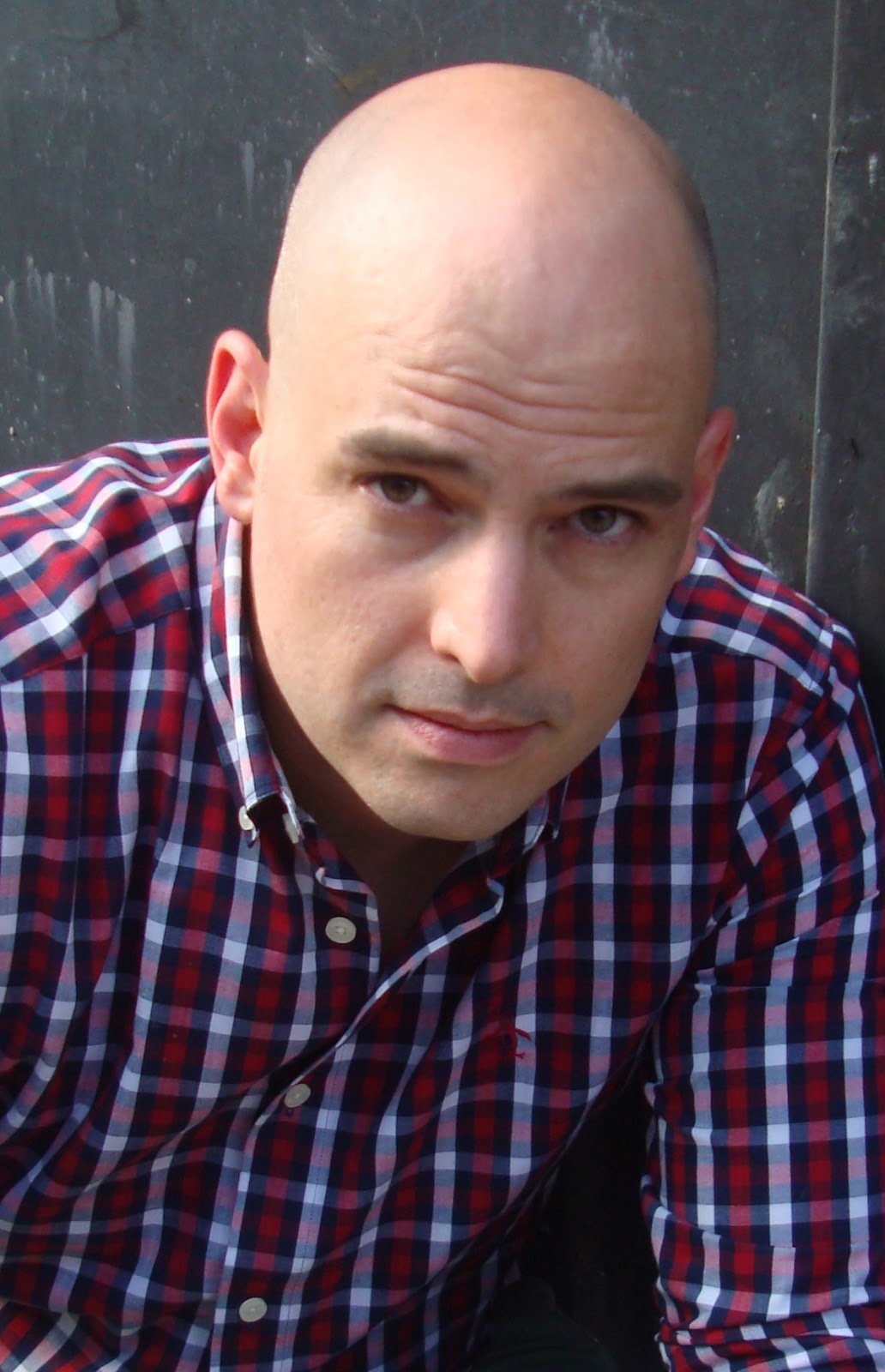
| Timothy Donnelly |
Fitzgerald, 28, will be reading with Timothy Donnelly, the poetry editor of The Boston Review, on Sunday, Dec. 9, at 2 p.m. The reading is part of the monthly series at the South Brunswick Library sponsored by the South Brunswick Arts Commission. It is free, though a donation of a nonperishable food item to the South Brunswick Food Pantry is appreciated.
“I’ve known Adam for quite a while, probably since he was in high school” said poet Hank Kalet, who organizes the reading series. “And I’ve seen his work grow to the point where he is one of the freshest new voices in American poetry. He has a strong sense of form and a deep reverence for language. I think people are going to enjoy his reading.”
It was Fitzgerald, editor of the journal Maggy, who suggested that Donnelly read in South Brunswick.
Donnelly, who is a 2012 Guggenheim fellow and the recipient of the prestigious Kingsley Tufts Poetry Award, lives in Brooklyn. He teaches at Columbia University and has taught at Princeton.
His work can be describes as an effort both to re-imagine the language and to reclaim it from the bureaucratic morass into which it has been driven in our political times.
In his most recent book – The Cloud Corporation – he works within categories that “suggest a kind of re-dreaming, re-inhabiting, or re-appropriating of the bureaucratic, the ‘corporate,’ of prefab language, discourse, and thought,” according to the poet Maureen N. McLane, who interviewed Donnelly for The Boston Review in April 2011.
Donnelly, in the same interview, described poetry as “answer(ing) a need to dramatize complex inner states. To externalize them.”
“There’s a sentence in Wallace Stevens’s ‘This Solitude of Cataracts‚’ one of my favorite of his poems‚ that’s always on my mind: ‘There was so much that was real that was not real at all.’ If I can use a phrase like “the life of the mind” without it sounding like rubbish or me like a kind of rube‚ and if it can be admitted that a life of the mind participates only partly in what we usually mean by reality‚ which is to say that mental life isn’t of the same order of reality as a tree or an apple or any manifest thing‚ then I’d like to say that a poem stands to make manifest that other part of our reality‚ that life of the mind‚ and to give it some fixity‚ some solidity. Poetry‚ it seems to me right now‚ serves to reveal the reality of what appears—compared to a mountain‚ say‚ or to an armchair—not very real at all‚ and yet which has often seemed the surest reality we can know of‚ even as we experience it slipping away.”
Donnelly, 43, has been writing poetry since he was 19 but said he did not become “comfortable” calling himself a poet until he “was hired by Columbia to serve on the faculty of the Writing Program as a poet per se.“
“I somehow felt more at ease with the term ‘poet’ used for myself as a professional title—probably because to refer to oneself as a poet without a good practical reason seems mostly boastful, and also a little nuts,” he said. “It’s more or less like calling oneself a genius, a mystery, a marvel, a witch, a chosen creature, or someone special.”
Fitgerald, for his part, is awaiting publication of his first full-length collection, The Late Parade, which is due from W. W. Norton / Liveright in June. He cites as his primary influences “Yeats, Hart Crane, Rimbaud, John Ashbery, Dickinson, Keats, Bernadette Mayer.”
“Describing one’s work is a trap,” he said. “But then again, so can not describing one’s work. I think of my work, sometimes, as ambient drone music, drug-induced hallucinations, hard-to-recall dreams, deviously intricate architecture that intimates some sense of neverendingness.”
He says that New York City itself is a tremendous influence, as well.
“Living in the legacy that is New York City forces one to take into consideration the potential for being involved in a community larger than poetry, or just poets,” he said. “This is a good, though hard to track thing. Most specifically, I find great inspiration in a certain kind of music, ambient drone, as well as the kind of displaced soundtrack you find in a David Lynch film; the paintings of Henri Rousseau and de Chirico; and even, dare I say it, a specific heightening of architecture: for instance, there’s a giant commercial building on Astor Place, whose basement/first floor areas house Kmart, but whose top floor are portico-like windows, and a pronounced roof—somehow the effect is of a Renaissance Palazzo: supersized, Americanized, which means a kind of imported Europeanism on steroids, to create the inflated grandeur that I find downright poetic.”
Timothy Donnelly and Adam Fitzgerald will read Sunday, Dec. 9, at 2 p.m. at the South Brunswick Library, 110 Kingston Lane, Monmouth Junction. The reading is sponsored by the South Brunswick Arts Commission.
For more information, contact Hank Kalet at otherhalf@comcast.net or call the Arts Commission at 732-329-4000, ext. 7365.
The schedule for the rest of the 2012-2013 series:
Sunday, Jan. 20: Princeton residents James Arthur, author of a new collection from Copper Canyon Press, and Jean Hollander
Sunday, Feb. 10: Maxine Susman, of Kingston, and Daniel Harris, of Princeton
March 17: Richard O’Brien and Mark Hillringhouse
Sunday, April 21: Kathe Palka and Linda Artzenius
Sunday, May 5: National Book Award finalists Kathleen Graber, nominated in 2011 for The Eternal City, and Princeton professor Susan Wheeler, nominated in 2012 for Meme.
Author: hankkalet
Hank Kalet is a poet and freelance journalist. He is the economic needs reporter for NJ Spotlight, teaches journalism at Rutgers University and writing at Middlesex County College and Brookdale Community College. He writes a semi-monthly column for the Progressive Populist. He is a lifelong fan of the New York Mets and New York Knicks, drinks too much coffee and attends as many Bruce Springsteen concerts as his meager finances will allow. He lives in South Brunswick with his wife Annie.
View all posts by hankkalet


 Hank Kalet