
I have a love-hate relationship with winter, as I suspect most people do. I hate the bone-chilling cold, the black ice that makes driving hazardous, hate shoveling snow from the driveway and sidewalk and brushing it from the car.
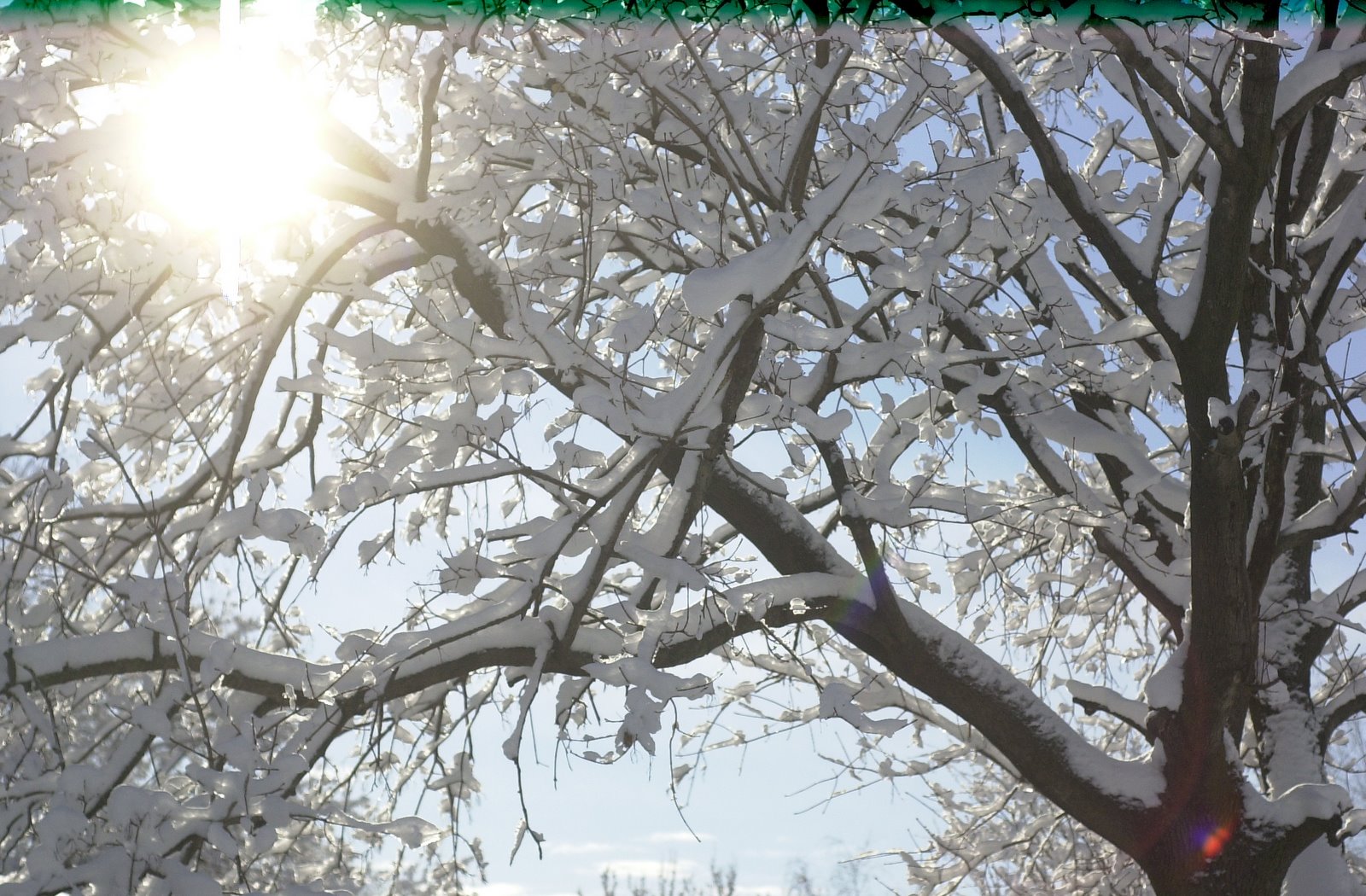
And yet, there are things about winter that are rather spectacular and spiritual, those small moments when we catch the light filtering through the snow-covered trees reminding us that beauty lurks in the most mundane of places, that our focus on just finding a way to get by day to day can obscure the wonders of what surround us.
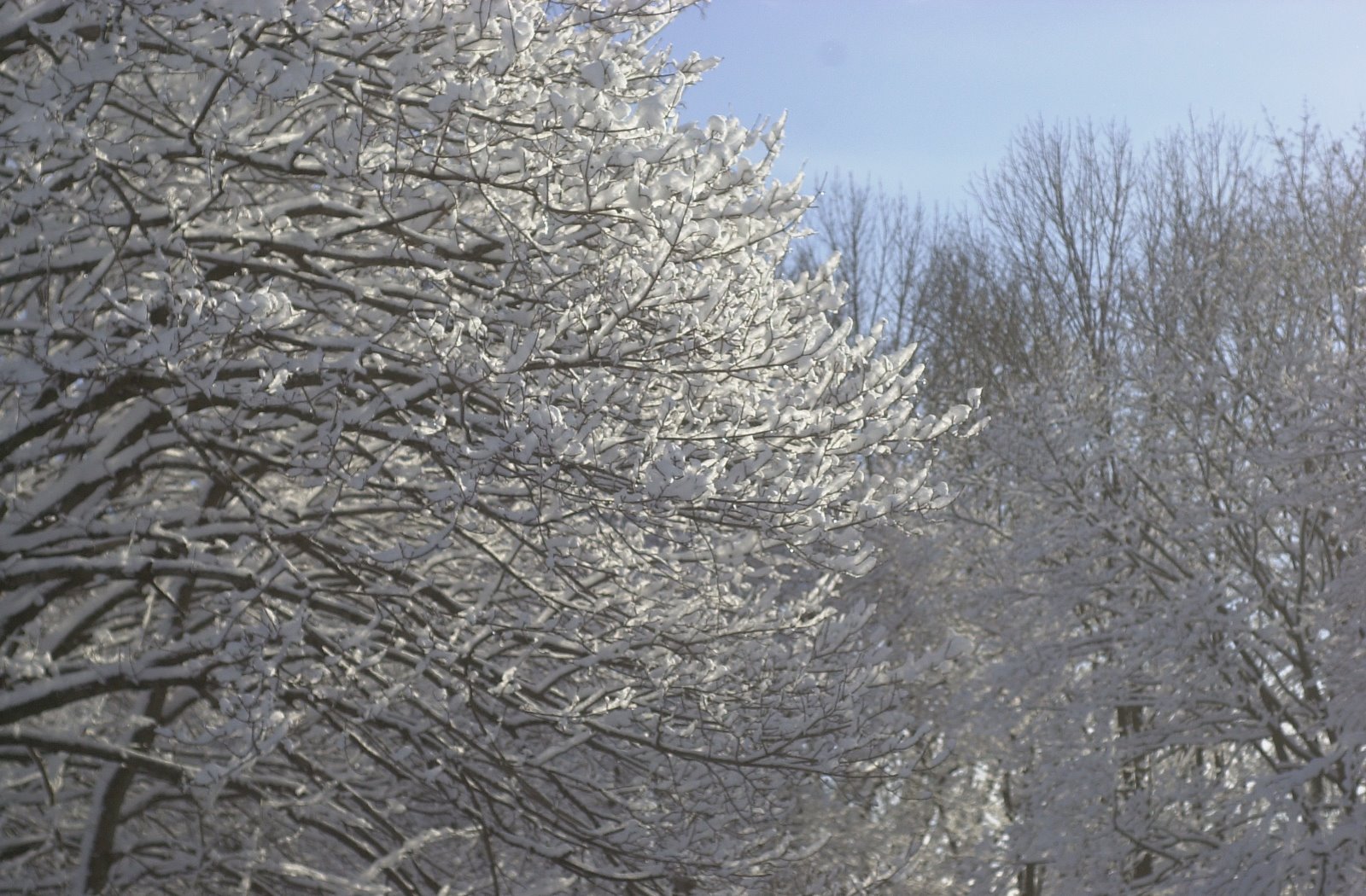
These wonders, for me, are an indication that there is something much greater than us in the world — god, perhaps, something that ties all of this together beyond biology and chemistry and physics.
Don’t misunderstand me, though. I do not subscribe to the so-called “intelligent design” theory, which posits an overarching plan for the world as if god (I am being deliberate in my use of the lower-case) were an architect with a pencil and T-square, taking pains to map out each little movement forward toward perfection.
I believe, as readers of many of my poems might have noticed, in randomness and imperfection, in the notion that things are as they are at any given moment and that change occurs either by accident or because we actively seek it. There is no utopia toward which the human race and the planet move, only the now, which is the only time we have.
So what of god, then? It is in he acceptance of this imperfection and impermanence, the pushing ahead, loving, living, creating, working to improve the lot of man and beast, despite the chaos, maybe because of the chaos, it is in this that the connection, the awareness of a greater entity outside of the self, what Buber calls “Thou” and others call god, can be found.
(Photos: Hank Kalet)

 Hank Kalet