
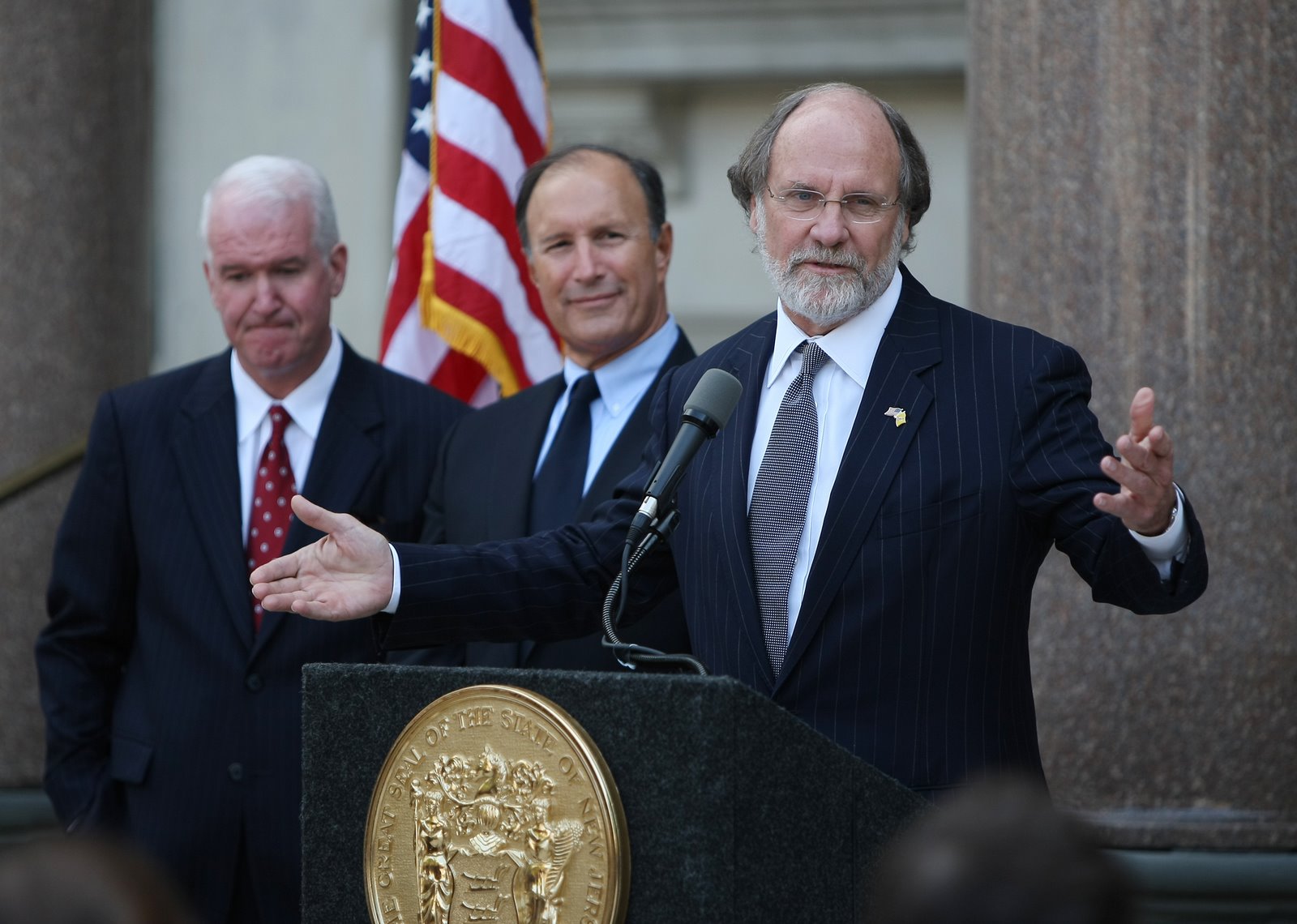
I wrote the other day about Gov. Corzine’s new ethics reform package, which includes rather strict bans on pay-to-play and wheeling (the practice of passing campaign contributions from committee to committee). I just finished a telephone press conference with the governor during which he outlined his plans and offered a sense of how important he views these reforms:
There is a need for greater transparency and public accountability in government, he said, and it is important that new rules be put in place to give the state’s residents confidence that elected and appointed officials are working in the public’s interest.
“We’re trying to, through ethics reform, deal with financial responsibility to make sure we are not spending money we don’t have to be spending,” he said. “And we are taking actions that would give people greater sense that the mix of money in politics is not determining the direction of public policy.”
The governor is using a two-pronged attack — enacting some reforms by executive order and pushing a number through the legislative process. In the end, he is hoping for comprehensive controls on pay-to-play that will be in force at all levels of New Jersey government.
Prior to the governor’s Sept. 24 executive order, only state contracts were covered under state rules (towns like Monroe and South Brunswick have their own pay-to-play restrictions in place). Businesses or their principles — those owning at least 10 percent of the business — were ineligible for public contracts worth at least $17,500 if they made reportable campaign contributions (more than $300) to a candidate committee and/or election fund of any gubernatorial candidate, or to any state or county political party committee within the previous 18 months.
In addition to the earlier rules, enacted by executive order under Gov. Jim McGreevey, Corzine has placed restrictions on contributions to local candidates and local party committees for firms seeking state contracts. He also removed the 10 percent requirement, meaning that all partners, no matter how small a stake they may have in a company, are now on the restricted list.
The governor said he would like to see a more comprehensive ban on pay-to-play at the local level, and he is encouraging the Legislature as part of his reform package to cover local contracting, as well.
He said “there are a number of municipalities that have been proactive in moving forward on (pay-to-play bans), but it is very uneven across the state.”
“I think there are only 60 of the 566 municipalities in New Jersey that have taken up these rules,” he said. “We’re asking for uniformnity on that so that the public can have the confidence that money in political contributions does not determine where contracts go.”
At the same time, he does not want state law to pre-empt stronger local laws, but “set a floor for every municipality.”
The wheeling ban may be more significant, because it should limit the ability of individual legislators or county freeholders to act as power brokers outside of their geographical regions.
“We want money raised in Bergen to stay in Bergen and money raised at the local level to stay at the local level — within limits,” he said.
On a related note, I asked him about the recent decision regarding Arizona’s clean elections law, in which its rescue money provision was deemed unconstitutional, a decision that has tabled the New Jersey clean elections experiment for the time being. The Arizona decision was based on a New York ruling over the summer that found unconstitutional a provision of federal rules altering contribution limits when candidates face self-funded opponents.
He says he remains committed to clean elections. He would “like to continue to expand its operation in the state” and was “disappointed in (the courts) its most recent negative interpretation” of the law.
“I am hearing legal advice that there has been an overreading of how much (the earlier New York decision) it affects clean elections,” he said.
“The more we can move in that direction, the better we can be served by reducing the role of political contributions as the basis on which candidates are chosen and elections are decided,” he said.

 Hank Kalet